Why Long-Term Investors Usually Win
Why Time Is the Long-Term Investor’s Best Friend
When it comes to building wealth, markets reward patience far more often than prediction skills. Behavioral finance—the study of how psychology affects money decisions—shows that many investors hurt their own results by reacting emotionally to short‑term news instead of sticking with a long‑term plan.
The good news: You don’t need to outsmart Wall Street. You just need to harness time, compounding, diversification, and calm decision-making.
The Power of Compounding
Compounding is earnings on top of earnings—your returns generate their own returns. Over long periods, this snowball effect can turn modest, regular investing into substantial wealth.
Historically, the S&P 500 has delivered average annual total returns above 10% over extended periods, though with wide swings year to year.[1] Because most of those gains arrive unpredictably, investors who stay invested through full market cycles are most likely to capture them.
Compounding works best when:
You start early (more years for growth)
You stay invested (don’t interrupt compounding by jumping in and out)
You reinvest dividends and interest
Trying to time the market—waiting for the “perfect” moment—is one of the quickest ways to disrupt compounding.
Why Patience Usually Beats Prediction
Behavioral finance research shows that investor behavior is often a bigger determinant of long‑term results than market performance itself.[2] Emotional decisions, poor timing, and reactionary moves tend to reduce realized returns.
Common behavioral traps include:
Recency bias: Assuming that recent performance (good or bad) will continue[1][5]
Loss aversion: Feeling losses more intensely than gains, leading to panic selling[4][5]
Overconfidence: Taking excessive risk because recent choices worked out well[3][6]
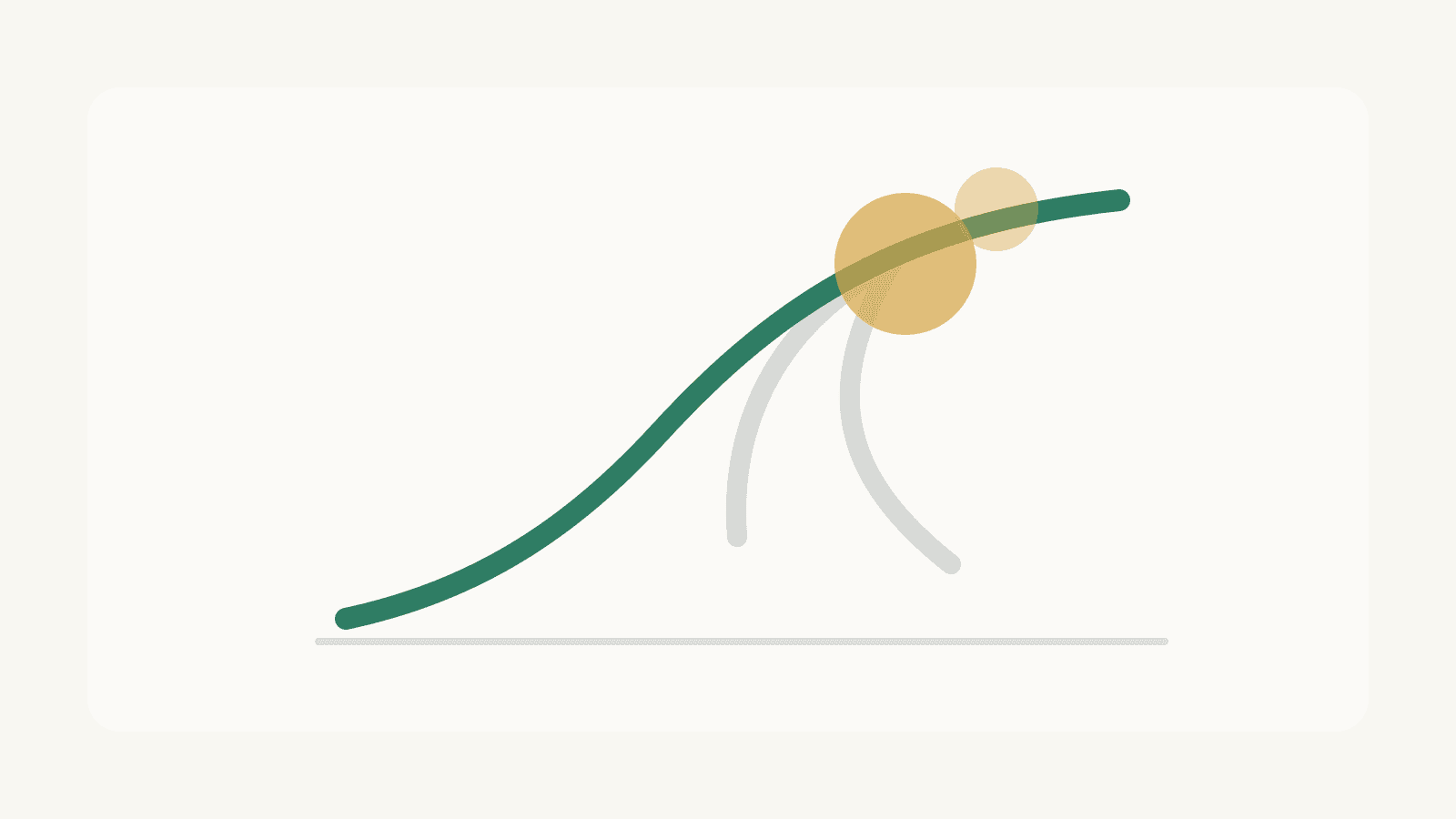
Long‑term investors recognize that markets move in cycles. There will be corrections and bear markets. Historical data shows that short‑term downturns typically look small when viewed on a multi‑decade chart, while the overall trend has been upward.[1] Those who stay disciplined through both good and bad times are better positioned to benefit from that long‑run trajectory.
Diversification: Don’t Bet the Farm on One Idea
Diversification means spreading your investments across different asset classes (stocks, bonds, cash), sectors, and regions. While it cannot eliminate losses, it can smooth the ride and reduce the impact of any single setback.
Behavioral finance tells us that concentrated bets can feel exciting—but they magnify emotional swings. A diversified portfolio:
Makes it easier to stick with your plan during volatility
Reduces regret if one company, sector, or country performs poorly
Helps align risk with your time horizon and goals
For truly long‑term investors, a diversified mix tilted toward equities, appropriate to their risk tolerance, has historically offered strong growth potential with manageable risk over full market cycles.[1][7]
Avoiding Reactionary Decisions
Markets will always fluctuate. Headlines will always shout for your attention. But financial success is rarely about reacting faster; it’s about staying disciplined.[2]
Some practical ways to avoid reactionary moves:
Create a written plan: Define your time horizon, risk tolerance, and target allocation in advance.
Automate good habits: Use automatic contributions and reinvestment of dividends.
Pre‑commit: Decide ahead of time how you’ll respond to big drops (for example, rebalance once a year instead of selling in fear).[3]
Review periodically, not constantly: Annual or semiannual check‑ins help you adjust thoughtfully, not emotionally.
Behavioral finance tools—like decision checklists and pre‑commitment strategies—are designed specifically to help investors override their biases and stick with long‑term plans.[3][4][7]
The Real Edge: Behavior, Not Brilliance
You don’t need to predict recessions, elections, or the next hot stock. You need a repeatable process that keeps your behavior aligned with your goals. That means:
Letting compounding work over decades
Practicing patience through both booms and busts
Using diversification to manage risk
Avoiding reactionary decisions driven by fear or greed
Markets have historically rewarded investors who stay invested, stay diversified, and stay calm. In other words: long‑term investors usually win because they let time and discipline do the heavy lifting.
FAQ
1. Is long‑term investing always better than trading? Long‑term diversified investing has historically produced more reliable results for most people than frequent trading, which is often driven by emotion and timing mistakes. A small minority of traders may succeed, but it is difficult, time‑consuming, and often risky.
2. Should I ever change my long‑term plan? Yes—when your life changes, not when headlines change. Major events like marriage, children, a job change, or nearing retirement may justify adjusting goals, risk level, or savings rate. Market noise alone usually is not a good reason.
3. What if I start investing later in life? Starting later means less time for compounding, but the same principles apply: be consistent, control costs, diversify, and avoid emotional decisions. You may need to save more, work longer, or take modestly more risk—ideally with a personalized plan from a qualified advisor.
Sources
[1] Multnomah Group – How Behavioral Finance Helps Shape Realistic Investment Expectations.
[2] Sequoia Financial – The Psychology of Money: How Behavior Shapes Financial Success.
[3] Meegle – Behavioral Finance and Private Equity.
[4] Matthew Boudreaux – The Role of Behavioral Finance in Financial Planning.
[5] Charles Schwab – Behavioral Finance Overview.
[6] Guggenheim Investments – Behavioral Finance.
[7] Morningstar – The Practical Guide to Behavioral Finance and Investing.
[8] Harvard Kennedy School – Investment Decisions and Behavioral Finance.
© 2026 Lux IPS, Inc. All rights reserved.